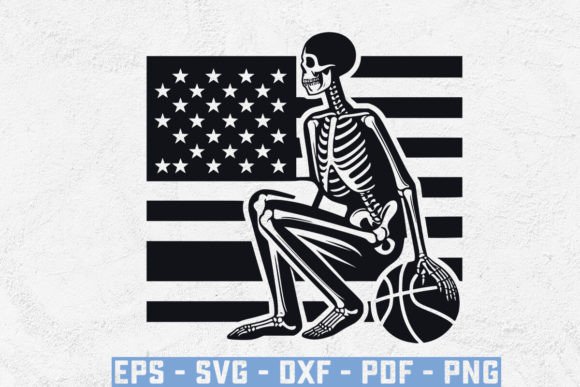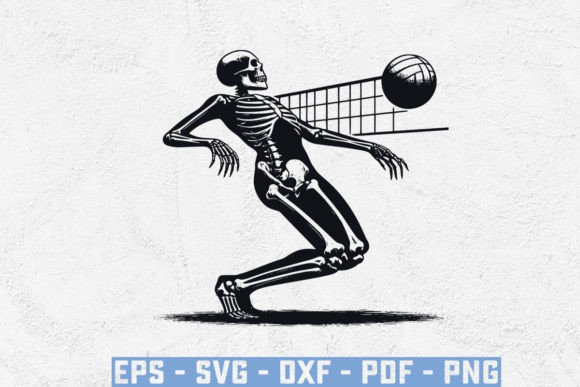
Get the Most from Your USA Flag with Skeleton Volleyball SVG: What to Know Before You Start
If you have come across the USA Flag with Skeleton Volleyball SVG, you already know it is a striking design that blends patriotism with a sporty, edgy look. Whether you are a hobbyist looking to create custom gear for a beach volleyball tournament or a small business owner wanting to expand your product line, this digital file offers immediate possibilities. But before you download, open, or start cutting, there are a few things worth understanding. Many people jump into using SVG files without realizing some common pitfalls, and that can lead to frustration, wasted material, or a final product that simply does not look right. Let us walk through what you need to know so you can use this design with confidence and get results that match your expectations.
What Exactly Is the USA Flag with Skeleton Volleyball SVG?
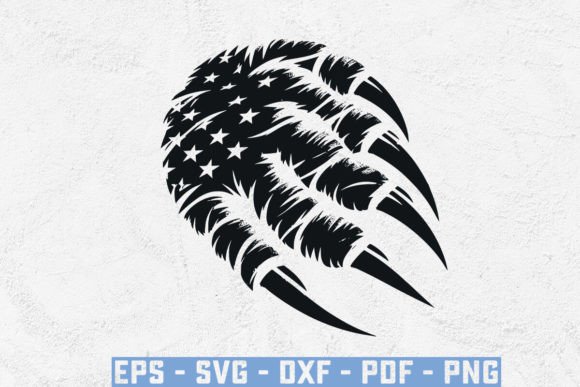
This is a digital graphics bundle that includes five file formats: SVG, EPS, Print Ready PNG, DXF, and PDF. The design features a skeletal figure playing volleyball, integrated with the American flag motif. It is scaled at 15 by 18 inches with a resolution of 300 dpi, which means you get clean, crisp lines suitable for both print and cut applications. Because it is a digital product, you receive instant access after purchase, with no shipping delays. The licensing allows for personal use and commercial use (excluding outright resale of the digital files themselves), so you can create physical products to sell.
The appeal here is versatility. You can use it on T-shirts, posters, decals, mugs, signs, or even laser-engraved items. But that versatility also means you need to understand how each file format works and what your specific project requires. Choosing the wrong format or assuming all files behave the same way is one of the most common mistakes people make.
Overlooking File Format Differences
One of the first hurdles is understanding that not all the included formats serve the same purpose. The SVG and EPS files are vector formats, meaning they are built from mathematical lines and can be scaled to any size without losing quality. The DXF file is also a vector format, often used with CAD software or certain cutting machines. The PDF contains a vector-based design as well. The Print Ready PNG, on the other hand, is a raster image made of pixels. It is ready to print at the given size and resolution, but enlarging it beyond 15 by 18 inches could result in pixelation.
A common mistake is treating the PNG as the primary file for cutting machines like Cricut or Silhouette. While you can use PNG files for print-then-cut projects, the SVG or DXF is almost always the better choice for smooth, clean cuts. If you try to cut a raster image without converting it properly, you may end up with jagged edges or inaccurate cut lines. Always default to the SVG or DXF for cutting, and reserve the PNG for print-only projects where you do not need precise cut paths.
Practical Advice for Format Selection
- For cutting machines (Cricut, Silhouette, Brother): Use the SVG or DXF. These give you clean, editable cut lines. If your software asks for a specific version, SVG is the most widely supported.
- For professional print shops or large-format printing: Use the EPS or PDF. These preserve vector quality and are standard in the printing industry.
- For quick printing at home or on transfer paper: Use the Print Ready PNG. It is already sized and optimized, so you can load it directly into your software.
Taking an extra moment to choose the right format saves you from redoing work later. I have seen many people struggle because they assumed the PNG would work for a vinyl cut, only to have their machine misread the image. A little upfront planning goes a long way.
Ignoring Software Compatibility and Settings
Another area where people run into trouble is assuming their software will handle the file perfectly out of the box. While the files are designed to be universally compatible, your specific program version or settings can affect how the design appears. For example, some older versions of Silhouette Studio may not open SVG files with certain embedded elements correctly. Similarly, free software like Inkscape or GIMP may interpret the DXF format differently than a paid program like Adobe Illustrator.
If you open the file and see missing lines, broken shapes, or strange gaps, the problem is almost never the file itself. It is usually a compatibility setting or an outdated software version. Before you troubleshoot, check for updates to your program. Also, verify that you are importing the file correctly. For instance, in Cricut Design Space, you should upload the SVG as a cut file, not as a print image, unless you specifically intend to print it. If you select the wrong upload type, the machine might try to cut around every pixel instead of following the vector path.
How to Avoid Compatibility Issues
- Keep your cutting software updated to the latest version.
- Test the file with a small scrap piece of material before committing to your final product.
- If the SVG does not import correctly, try the DXF version instead. Some machines handle DXF more reliably.
- When in doubt, open the PDF or EPS in a viewer to confirm the design looks correct, then import the vector file into your cutting program.
This kind of proactive checking prevents wasted material and frustration. A quick test cut takes two minutes and can save you from ruining a shirt or a sign you spent time preparing.
Misunderstanding the Commercial License
The licensing for this USA Flag with Skeleton Volleyball SVG bundle is straightforward, but I have seen people misinterpret it. You are allowed to use the design to create physical products for sale. That includes items like apparel, accessories, home decor, and printed goods. You are also allowed to use it for personal projects, gifts, and promotional materials for your own business.
What you cannot do is resell or redistribute the digital files themselves. That means you cannot list the SVG, EPS, PNG, DXF, or PDF files on a marketplace, share them in a group, or include them in a bundle of digital assets that someone else downloads. The license is for the end product, not for the raw files. This is a standard restriction, but it catches people who are used to buying print-on-demand designs with broader redistribution rights.
If you plan to sell items with this design, you are in good shape. Just keep the digital files to yourself and only share the physical items you create. If you are unsure whether a particular use is allowed, the safest approach is to treat the design like a physical tool you rent, not something you own outright. You own the items you make, but you do not own the digital artwork to pass along.
Assuming the Design Works at Any Size Without Adjustment
The files are provided at 15 by 18 inches at 300 dpi, which is an excellent size for most projects. However, that does not mean you can shrink it down to a one-inch sticker or blow it up to a four-foot poster without checking the details. When you scale a vector design, the lines and shapes remain mathematically perfect, but the visual impact changes. Small text or thin skeletal bones might become nearly invisible at tiny sizes, while oversized versions may reveal awkward spacing or excessive empty areas.
With this particular design, the skeleton volleyball player includes fine details in the bones and the flag elements. At very small sizes, those details can blur together, especially if you are printing on a textured surface like canvas or using a low-resolution printing method. Before you finalize your project, print or cut a small test to see if the design holds up at your intended dimensions. Adjust the scale as needed, and consider simplifying the design if you are working at a very small scale. Sometimes, removing a few interior cutouts or merging certain shapes makes the design more readable.
Better Approach for Sizing
- For small items (under 3 inches), increase the contrast by using a solid background color and a simple one-color cut.
- For medium-sized items (4 to 12 inches), the full detail will generally shine, especially in white or black vinyl.
- For large items (over 20 inches), check that the skeleton proportions look balanced. Sometimes enlarging a design reveals that elements like the flag stripes need to be thickened to maintain visual harmony.
A little testing here prevents a finished product that looks amateurish. You want the design to be clear and impactful at any size.
Neglecting to Check for Mirroring and Orientation
If you are using heat transfer vinyl or any adhesive vinyl that will be applied to a surface, you need to mirror the design before cutting. This is a standard step, but it is surprisingly easy to forget, especially if you are working quickly. The USA Flag with Skeleton Volleyball SVG is typically oriented as you see it on screen, so if you cut it without mirroring, your final appliqué will be backward. That might not matter for a symmetrical design, but with a flag and a skeleton figure, orientation matters a lot. The stars on the flag should face forward, and the skeleton should appear in its correct posture.
Most cutting software has a mirror or flip option that you should activate before sending the job to the machine. If you are unsure, cut a small test piece with cheap vinyl first. Once you confirm the orientation, proceed with your good material. I have seen many people waste expensive heat transfer sheets because they forgot to flip the image. A quick test saves both money and time.
Underestimating the Value of Print Ready Files
The Print Ready PNG included in this bundle is not just an afterthought. It is a fully prepared raster image at 300 dpi, sized exactly to 15 by 18 inches. For anyone who does not own cutting software or does not want to deal with vector editing, this file is a direct solution. You can take it to a print shop, upload it to a print-on-demand platform, or print it at home on transfer paper. The file has a transparent background, so it overlays neatly onto colored garments or surfaces.
One mistake people make is converting the SVG to a PNG themselves instead of using the provided PNG. When you convert from vector to raster, the quality depends on your export settings. If you compress too much or resize incorrectly, you lose clarity. The included PNG has already been optimized, so rely on it whenever you need a raster version. Save yourself the extra step and the potential quality loss.
Practical Checklist Before You Start Your Project
- Decide what you are making (cut vinyl, print, heat transfer, etc.).
- Select the appropriate file format based on your machine or print method.
- Update your software to ensure compatibility.
- Mirror the design if you are applying it to a surface.
- Test on scrap material first, especially for size and orientation.
- Check the license to confirm your intended use is allowed.
- Keep the digital files secure and do not share them.
Following this checklist takes only a few minutes, but it dramatically reduces errors. The USA Flag with Skeleton Volleyball SVG is a versatile and attractive design that can serve many purposes. Whether you are making items for a holiday sale, a team event, or just for fun, understanding these details helps you produce quality work that you can be proud of. Avoid the common mistakes, take the time to test, and you will get the most out of your digital purchase.